

Introduction: The Evolution of Modern Flexography
In the hyper-competitive world of high-volume packaging, processing speed and structural integrity are non-negotiable. Traditional multi-step manufacturing setups—where printing, coating, and die-cutting occur on separate, isolated machinery—frequently introduce registration errors, material damage, and costly transit delays between departments. To overcome these bottlenecks, leading packaging manufacturers have systematically transitioned to the Inline Flexo Printing Machine.
By aligning every critical production stage in a single, continuous linear workflow, the modern inline flexo press eliminates secondary handling and ensures exceptional print consistency across miles of substrate. Whether you are producing heavy-duty corrugated shipping cases, folding beverage cartons, or complex pressure-sensitive labels, understanding the mechanics, integration strategies, and operational nuances of inline flexo technology is the key to unlocking true workshop profitability and meeting strict international quality standards.
1. What is an Inline Flexo Printing Machine? Core Architecture & Mechanics
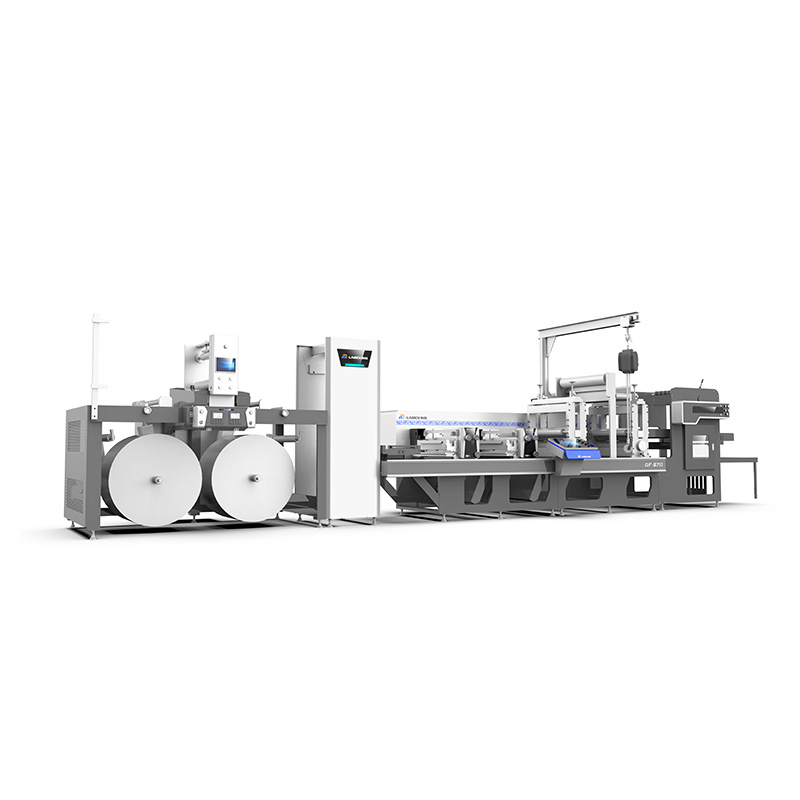
An Inline Flexo Printing Machine is a highly engineered industrial printing system where the individual color stations (or printing decks) are arranged horizontally in a continuous sequence, one after another. Unlike central impression (CI) drums where all colors wrap around a single large cylinder, an in line flexographic printing machine utilizes dedicated impression cylinders for each distinct color station. This linear architecture provides an open, accessible machine layout that allows web materials to pass smoothly through the press in a straight horizontal path.
From an engineering standpoint, each station of an inline flexo press operates as an independent module comprising an ink fountain, an anilox roller, a plate cylinder, and an impression cylinder. The real magic of this configuration lies in its multi-processing capability. Because the substrate travels linearly, operators can easily insert converting units—such as rotary die-cutters, laminators, continuous slitters, and heavy-duty waste strippers—directly after the final print station. This means a raw roll or sheet of material enters the machine at one end and emerges as a fully printed, cut, and finished product at the other, maximizing throughput while drastically reducing labor overhead.
2. Inline Flexo Press vs. Stack Type Flexo Printing Machine: A Critical Comparison
When evaluating machinery for high-output manufacturing, factory owners often weigh the benefits of an inline flexo press against a stack type flexo printing machine. The fundamental differences lie in structural orientation, web tension control, and substrate versatility. A stack type flexo printing machine features printing stations stacked vertically on top of one another. While this design boasts a compact footprint that saves floor space, it inherently limits the length of the web path between stations and makes it difficult to integrate heavy inline converting tools.
For heavy-weight packaging applications, the horizontal setup of the Inline Flexo Printing Machine offers distinct technical advantages. Stack machines often struggle with heavy substrates like thick folding cartons or multi-wall corrugated boards because bending these rigid materials vertically around tight cylinders causes structural delamination and surface creasing. Conversely, an in line flexographic printing machine handles the substrate along a flat, stable horizontal plane. Furthermore, tension tracking across a horizontal line is far more stable when managing heavy materials, preventing registration shifts that often plague vertical stack configurations. If your production roadmap requires heavy board converting, inline systems deliver the required structural safety and precision that stack machines simply cannot match.
3. Technological Advantages of the Modern Inline Flexo System
The shift toward the modern Inline Flexo Printing Machine is driven by its exceptional mechanical stability and modular agility. In high-speed packaging operations, web tension fluctuations are the primary cause of registration errors and material waste. An inline flexo press addresses this by employing independent servo motors for each print station. This decoupling of mechanical drives allows for micro-level tension adjustments along the horizontal plane, ensuring that even stretch-sensitive or highly rigid materials maintain perfect registration at speeds exceeding 300 meters per minute.
Another major engineering advantage is its unparalleled modular versatility. Because the configuration of an in line flexographic printing machine is linear, it provides ample physical space between and after the print decks to install advanced curing and converting technologies. Operators can seamlessly integrate high-power UV or LED curing lamps, hot-air drying hoods, corona treaters, turn bars for double-sided printing, and rotary die-cutting cassettes. This eliminates the need for separate offline finishing processes, significantly shortening the production cycle, reducing plant floor footprint overhead, and minimizing the risk of dust contamination or material scratching during roll transport.
4. Choosing the Right Substrate: From Corrugated Cardboard to Labels
The flat, linear feed path of an Inline Flexo Printing Machine makes it the most versatile choice for handling an extensive range of substrate thicknesses and weights. In standard flexible packaging or label production, maintaining web control on lightweight materials requires delicate handling. However, the true strength of an inline flexo press is realized when running heavy-duty stocks, such as thick liquid packaging board, folding cartons, and single-face or double-face corrugated cardboards.
When printing on heavy boards, vertical bending inside a stack press causes severe structural fatigue and fluting deformation. An in line flexographic printing machine runs these heavy materials through a flat, low-deflection horizontal transport system, preserving the structural rigidity and flute integrity of the corrugated board. Furthermore, the inline architecture accommodates water-based inks for eco-friendly shipping cartons, solvent-based inks for high-gloss coatings, and UV-curable inks for premium cosmetic labels. This substrate and ink adaptability ensures that a single workshop can pivot from industrial packaging to high-end consumer labels without replacing the primary press core.
5. The Complete Solution: Step-by-Step Implementation & Operational Checklist
To achieve an optimized Return on Investment (ROI) and minimize waste when deploying an Inline Flexo Printing Machine, factory managers must adopt a holistic operational framework. Below is the definitive step-by-step implementation roadmap used by top-tier packaging plants worldwide.
Phase 1: Pre-Press & Tooling Standardization
● Match the anilox roller line screen (LPI) strictly to the photopolymer plate resolution. For fine text and halftone screens on an inline flexo press, utilize laser-engraved ceramic anilox rollers with a 4:1 or 5:1 ratio relative to the plate's screen ruling.
● Deploy high-density digital photopolymer plates with flat-top dot technology to reduce dot gain under high impression pressures.
Phase 2: Precision Mechanical Calibration
● Execute parallel alignment checks on all plate and impression cylinders to prevent uneven ink transfer across the web width.
● Calibrate the automated register control system using matrix cameras that read micro-marks inline flexo, allowing the press to auto-correct positional drifts during speed transitions.
Phase 3: Environmental & Ink Control
● Maintain consistent ink viscosity and pH values (for water-based inks) using automated ink kitchen pumping loops. Fluctuations in viscosity alter color density and compromise barcode readability.
Phase 4: Preventative Maintenance Protocol
● Implement a strict daily cleaning schedule for the doctor blade assemblies and anilox cells using specialized ultrasonic or baking soda blasting systems to prevent dried ink plugging, which directly impacts print consistency.